
A new kind of chemistry
A note from Naz
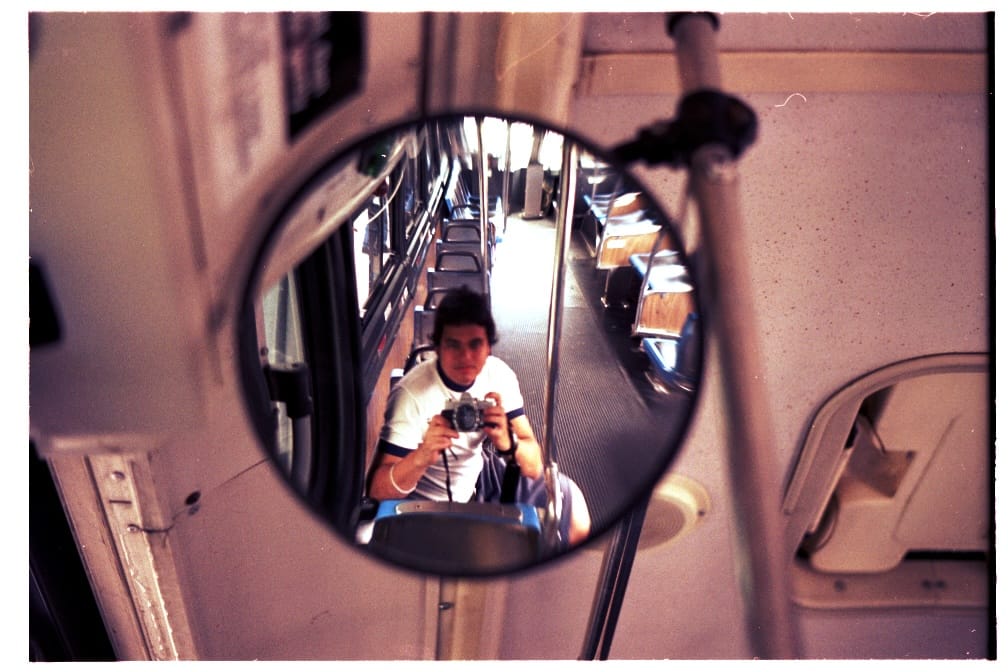
I’ve had a camera in my hand for over 30 years. It started with cheap family point-and-shoots in the 80s and 90s, then earnestly going digital with a single-megapixel point-and-shoot in 1999, through my first DSLR, and eventually a stint at VSCO redesigning their app and building out the product design team. Making images has always been the through-line, no matter what else I was doing.
Editing them is where it fell apart.
Lightweight preset apps lack taste. A one-tap filter applied on top of an image doesn't give you the depth and nuance of more complex image processes.
Full editors like Lightroom have only gotten denser — bloated interfaces, AI features, and undisciplined focus. I used to dread opening Lightroom: waiting for my library to load, then staring at a panel full of options until I melted into indecision. And that’s before I even started working on a photo. It stopped being joyful work.
I want to be creative, I want to make art. I want to feel something. My goal isn’t to prepare a pristine, algorithm-approved image for an app to judge. It's for sharing with people.
Some time after Ryan and I had both left VSCO, I mentioned to him how much I liked DaVinci Resolve's UI and UX. He went exploring, and deep in a color-grading Discord found Juan Pablo Zambrano — a color engineer who’d been building his own tools because nothing else could keep up with his eye. The two of them commiserated over the same exhausting editing experience. They got into why images and pixels work the way they do, and how it should be done differently. They committed to building Aphera in 2024. I saw early alphas as a friend, and eventually couldn't stay on the sidelines — I joined in October 2025. It's been two and a half years since that first commit.
We’re building Aphera because tech keeps drifting toward AI workflows and letting vibes take the wheel — computational photography, algorithm-driven looks, and engagement bait. It removes the creativity, exploration, and expression that made this fun in the first place. We’d rather sweat the details, take our time questioning why, and build a better approach. This is our answer: a speedy, intentional, keyboard-driven Mac-native photo editor that brings delight back to editing and sharing the moments you actually care about.
— Naz Hamid, co-founder
Ryan Carver
Ryan Carver has been making photographs and software since an early age. It came naturally, growing up in a household of Hasselblads, Mamiyas, and a Mac 128k. From those beginnings he's practiced creative outlets of many kinds, but his most natural medium is a text editor. After the wild creativity of Flash and HTML in the early 2000s, plus a stint at Google, he co-founded the webfont service Typekit, soon acquired by Adobe. There he brought Adobe Fonts to Creative Cloud, putting Typekit's library on every designer's desktop. In 2015 he began making his way back to photography by joining VSCO as head of product, guiding the release of their successful subscription service. But he missed building, so returned to code with Series, a photo layout app for iOS loved by photographers, and an excuse to work at the intersection of imaging and interaction design.
Naz Hamid
Naz Hamid is a designer, photographer, and writer. Driven by the early web, he explored blogs, dove deep in design portals and forums, and practiced it all with a triplet of sites: a blog, a photo blog, and a design portfolio. Design took hold and in 2000 he founded Weightshift, an acclaimed studio whose work shaped the visual language of a generation of digital products. From 2016–2018 he joined VSCO to redesign the iOS app, launch memberships, and lead design on creator-driven features — developing a deep fluency in how photographers think, share, and see. He has since worked as a Creative Director and founding designer for a range of companies, always drawn back to the intersection of craft and tools.
Juan Pablo Zambrano
Juan Pablo Zambrano is a Color Engineer by practice, a Chemical Engineer by education, and a Software Developer by chance. Growing up in a household of programmers, he was encouraged to chase every interest, from the arts to the sciences, while successfully avoiding a terminal for most of his life. That changed with image editing, which combined both sides. After learning the fundamentals from film industry experts, Juan Pablo realized the existing tools couldn't quite keep up with his vision. He began building his own, starting with 2499-DRT. What began as a personal solution soon powered hundreds of global projects — from Oscar-nominated shorts and television series to commercial campaigns for the world's biggest brands — and contributes to one of the industry's leading film emulation plugins.